
TLDR
- Clear strategy at the top is not the same as change readiness on the ground.
- Four things widen the gap: signal loss, decision rights, rigid structure, and weak trust.
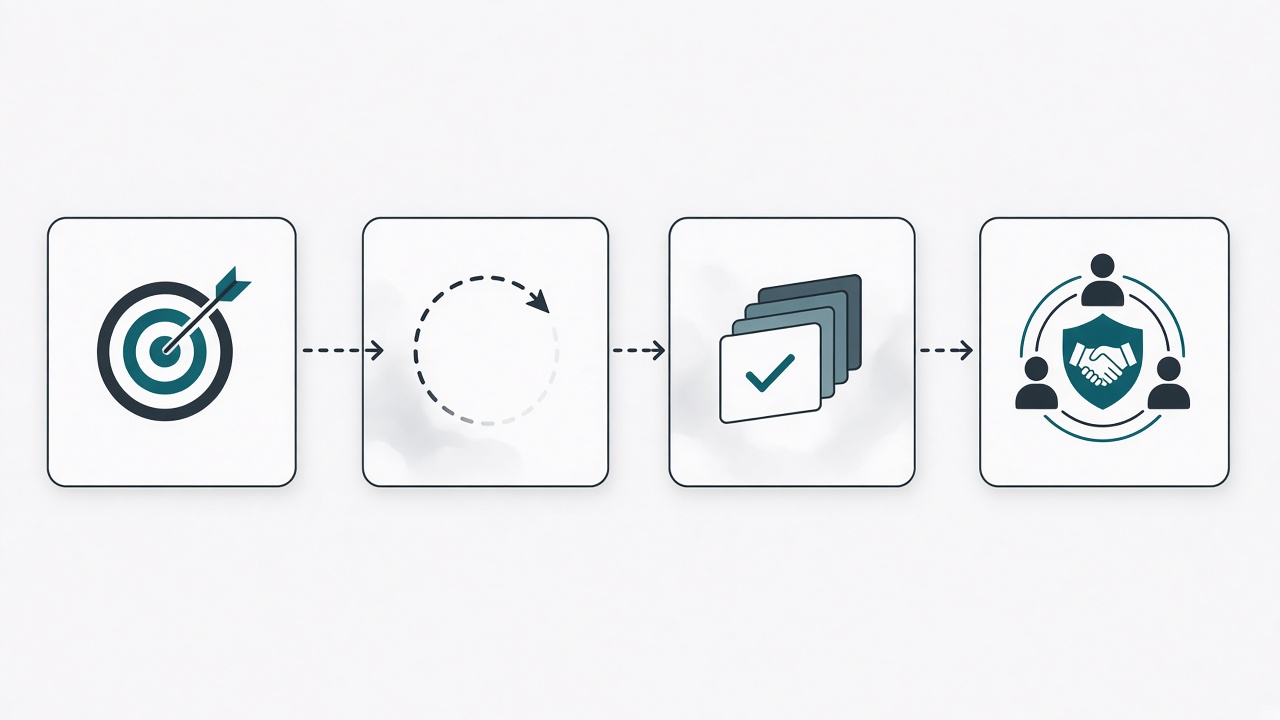
- Close it by carrying purpose with the work, giving teams real authority, fixing slow structures, and making it safe to raise risk early.
Ask executives whether their organization’s purpose is clear enough to adapt and act, and many say yes.
Ask the people delivering the work, and the answer is usually more complicated. They describe instructions without the reasoning behind them, priorities that shift without explanation, and decisions that stall because nobody close to the work has the authority to make them.
That distance is what PMI and PMI Agile Alliance call the change-readiness gap: the space between an organization’s intent to adapt and its ability to execute.
This article summarizes their report, Closing the Change-Readiness Gap: What Gets Lost Between Strategy and Execution. Figures and findings below come from that report unless another source is named.
Primary source: PMI and PMI Agile Alliance, Closing the Change-Readiness Gap (also published with the Manifesto for Enterprise Agility research).
What Is the Change-Readiness Gap?
Leaders often judge readiness by the clarity of the strategy they set.
Project professionals judge readiness by what they actually receive: context, authority to act, structures that support the work, and enough trust to raise problems early.
The report’s research base includes surveys of more than 700 executives, insights from more than 30 C-suite leaders, and input from nearly 100 practitioners across industries, roles, and geographies.
Outside research cited in the report shows the same pattern:
82%
reported strategic agreement
but
23%
could describe that strategy
Harvard Business Review, cited in the PMI report
88%
of leaders were confident the reorg would yield results
but
36%
of employees felt the same
Bain & Company, cited in the PMI report
Agreement on paper is not the same as shared understanding in daily work.
Four Obstacles That Widen the Gap
The report groups the breakdown into four obstacles.
01
Signal Loss
Intent fades as it moves through the organization
02
Decision Rights
Authority sits far from where value is created
03
Structural Trap
Stable models struggle under continuous change
04
Psychological Safety
Without trust, risks stay hidden when it matters
72%
executives: purpose supports agility
$15k
avg. annual cost of misalignment per employee
34%
complex projects delayed by stakeholder decisions
41%
say the model supports rapid reallocation
1. Signal Loss
Strategic intent loses clarity as it moves through the organization.
In the report, 72% of executives agree or strongly agree that their organization’s purpose allows them to adapt and execute with agility. Only 20% of executives name a lack of clarity and purpose as their greatest challenge to agility.
72%
of executives say purpose supports agile execution
$15k
average yearly cost of misalignment per employee (Axios)
Project professionals describe a different day-to-day reality: instructions without a clear “why,” goals that feel disconnected from the work, and difficulty sending useful feedback upward.
Guessing is expensive. The report cites an Axios finding that misalignment and poor communication average about US$15,000 per employee each year. That cost shows up as escalations that could have been local decisions, duplicated work, conflicting priorities, and waiting for clarification.
To close this part of the gap: make sure purpose travels with the work, not only with the slide deck.
2. Decision Rights
Authority is often far from where value is created.
According to the report, 22% of executives say empowering decisions at the edge is the most difficult enterprise-agility principle to achieve or sustain. At the same time, 18% say that principle would have the greatest impact if it were embedded across the organization.
For project professionals, the hard part is often not “who owns the decision on paper.” It is that the people closest to the work still cannot decide. Common friction includes multiple approval layers, centralized governance, and pressure to move fast without matching authority.
22%
of executives say empowering edge decisions is hardest to sustain
and
34%
of complex projects delayed by stakeholder decision-making
PMI change-readiness report and related PMI complexity research
The report also notes related PMI complexity research: more than a third (34%) of complex projects experienced delays in stakeholder decision-making.
To close this part of the gap: enable authority within clear guardrails, so teams can act without waiting for every small call to climb the hierarchy.
3. The Structural Trap
Operating models designed for stability can become fragile when change is continuous.
41%
of executives say their operating model supports rapid reallocation of capital and talent
Only 41% of executives in the report believe their operating model supports rapid reallocation of capital and talent. Teams feel that as drag: dependencies, approval processes, and silos that slow response even when the strategy sounds clear.
Organizations move at the speed of their slowest dependency. More escalation meetings rarely fix the root issue if people still lack context and local authority.
To close this part of the gap: find the pain points in the operating model and redesign for flow, not only for control.
4. Psychological Safety and Trust
Enterprise agility depends on surfacing risks, challenging assumptions, and learning quickly. Without trust, critical information does not reach decision-makers when it matters.
86%
of executives agree collaboration and transparency are essential agile values
In the report, 86% of executives agree that collaboration and transparency are essential agile values. Practitioners still describe what happens when safety is missing: risks not raised, passive resistance, weak commitment, and avoided conversations.
The report treats psychological safety as an operational issue, not only a culture slogan. If speaking up is not an expectation that leaders model, teams will protect themselves by staying quiet.
To close this part of the gap: everyone, especially leaders, has to model the behavior they want under pressure.
What Project Professionals Can Do With This
The report is clear that closing the gap is not a one-sided job. Executives set conditions. Project professionals bring those conditions into daily delivery.
In practice, that often means:
- Repeating the business “why” in plans, status, and decisions, not only the task list
- Making decision rights visible: what the team can decide, what needs sponsor input, and how fast answers should come back
- Showing where structure creates delay (handoffs, approvals, silos) with facts, not blame
- Creating rooms where risks can be named early, while there is still time to adapt
AI can speed analysis and content. The report’s point is that alignment, accountability, and trust stay human work. Those are what turn strategy into results.
Sources
- PMI and PMI Agile Alliance. Closing the Change-Readiness Gap: What Gets Lost Between Strategy and Execution. Available via Agile Alliance.
- PMI Agile Alliance. Manifesto for Enterprise Agility (2026), referenced throughout the report.
- Harvard Business Review finding on strategic agreement versus ability to describe strategy (cited in the report).
- Bain & Company finding on leader versus employee confidence in reorganizations (cited in the report).
- Axios finding on the annual cost of misalignment and poor communication, about US$15,000 per employee (cited in the report).
If you want the full charts and executive/practitioner side-by-side findings, read the original report rather than treating this page as a substitute.